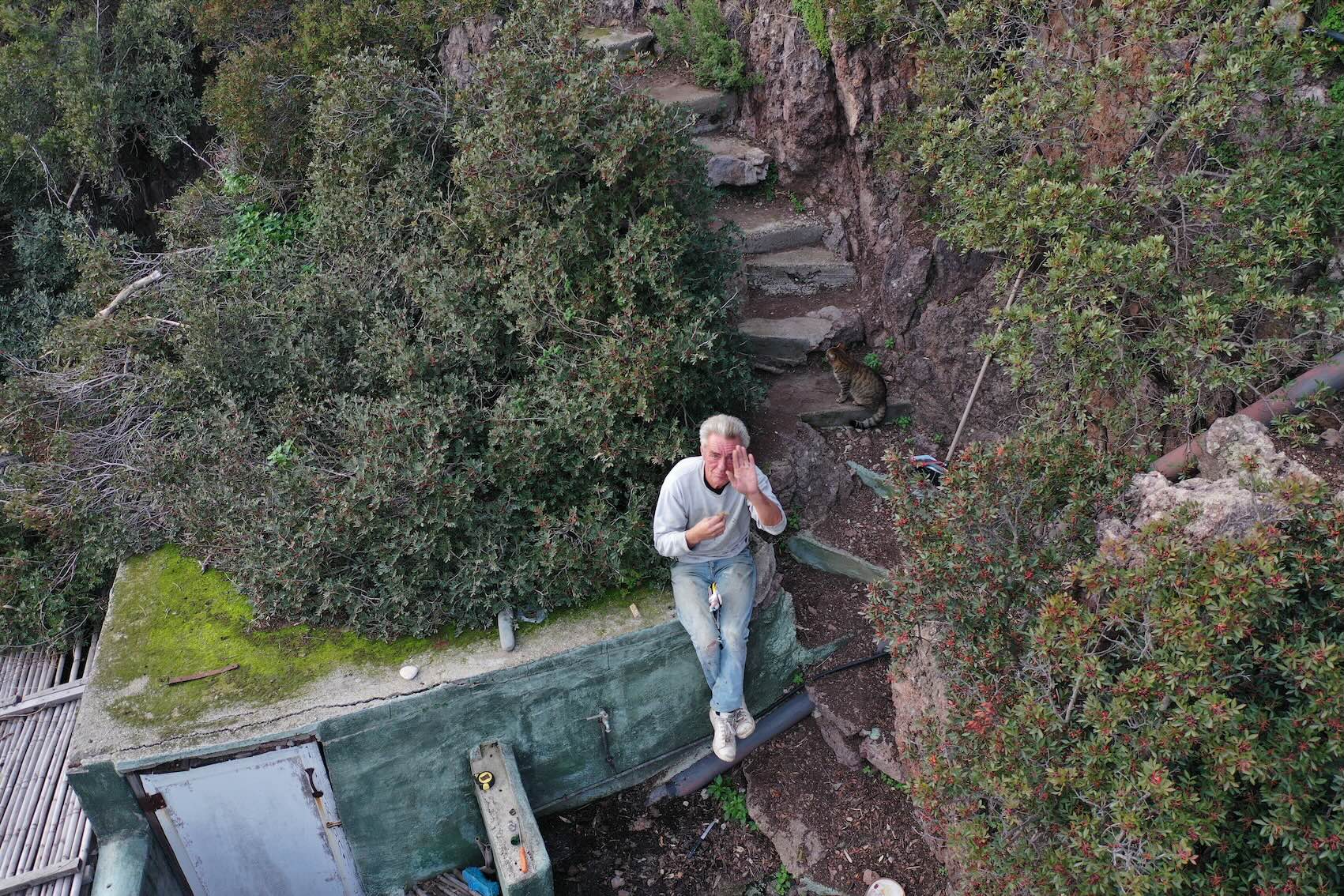
Wayne’s house is not a house – at least not in the conventional sense of the word. It is a living organism that, from the moment it first came into being, has never ceased to grow and evolve.
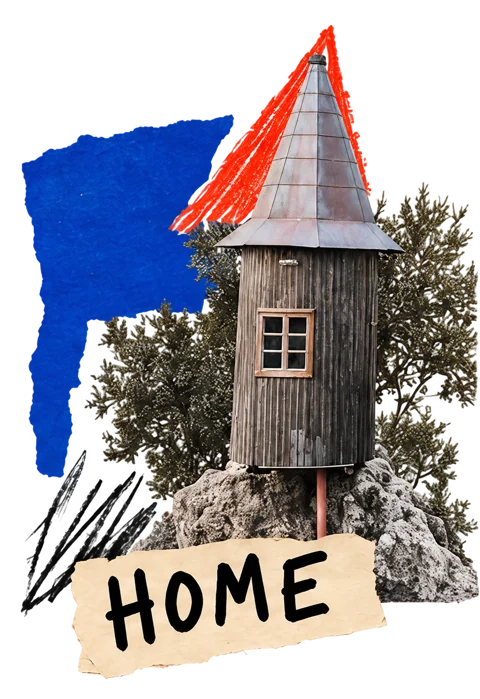
It all began many years ago, when a shepherd stacked a few stones one atop another to build some kathikés – small makeshift shelters for animals. In this improvised, organic architecture, the shepherd wove large natural rocks into the slope of the land itself.
When, in the early 1980s, a young Wayne first encountered these humble structures, he was already spellbound by the raw purity of the wild yet enchanting landscape of Mount Kapsalos and the ravine of Lagada below. But it was the sight of those primitive stone enclosures that ignited in him a passion – a passion that would accompany him for all his life.
Wayne managed to buy the land and, almost as if mesmerized, he immediately began to incubate something – something organic, almost cellular. Cell by cell, stone by stone, with whatever materials he could gather and treasure – and always with endless stone and unyielding devotion – he nurtured and expanded what would become his home. He never stopped building around the original kathikés.
At times, I believe, he did not fully know what he was doing. He was simply following an instinct, a spark of inspiration breathed into him by the landscape and by the primitive, natural constructions of the shepherds. Yet forty-five years later, he has created one of the most striking – and yet modest, seamlessly integrated into the land – architectural works I have ever encountered.
As an architect, I believe Wayne’s lifetime achievement deserves one day to be studied in schools of architecture as an extraordinary example of organic, bioclimatic, DIY design – an architecture that blends boundless ingenuity, passion, imagination, respect for nature, functionality, and beauty.
I had the good fortune to meet Wayne in the very first years of his settlement in Kapsalos, and to witness nearly every stage of this ongoing creation – the uninterrupted flow of creativity that gave birth to a complex which is not merely his home, but a place of coexistence and sharing for friends from every corner of the world. Wayne’s annual Full Moon Party, held without fail for decades, has now become nothing short of iconic.
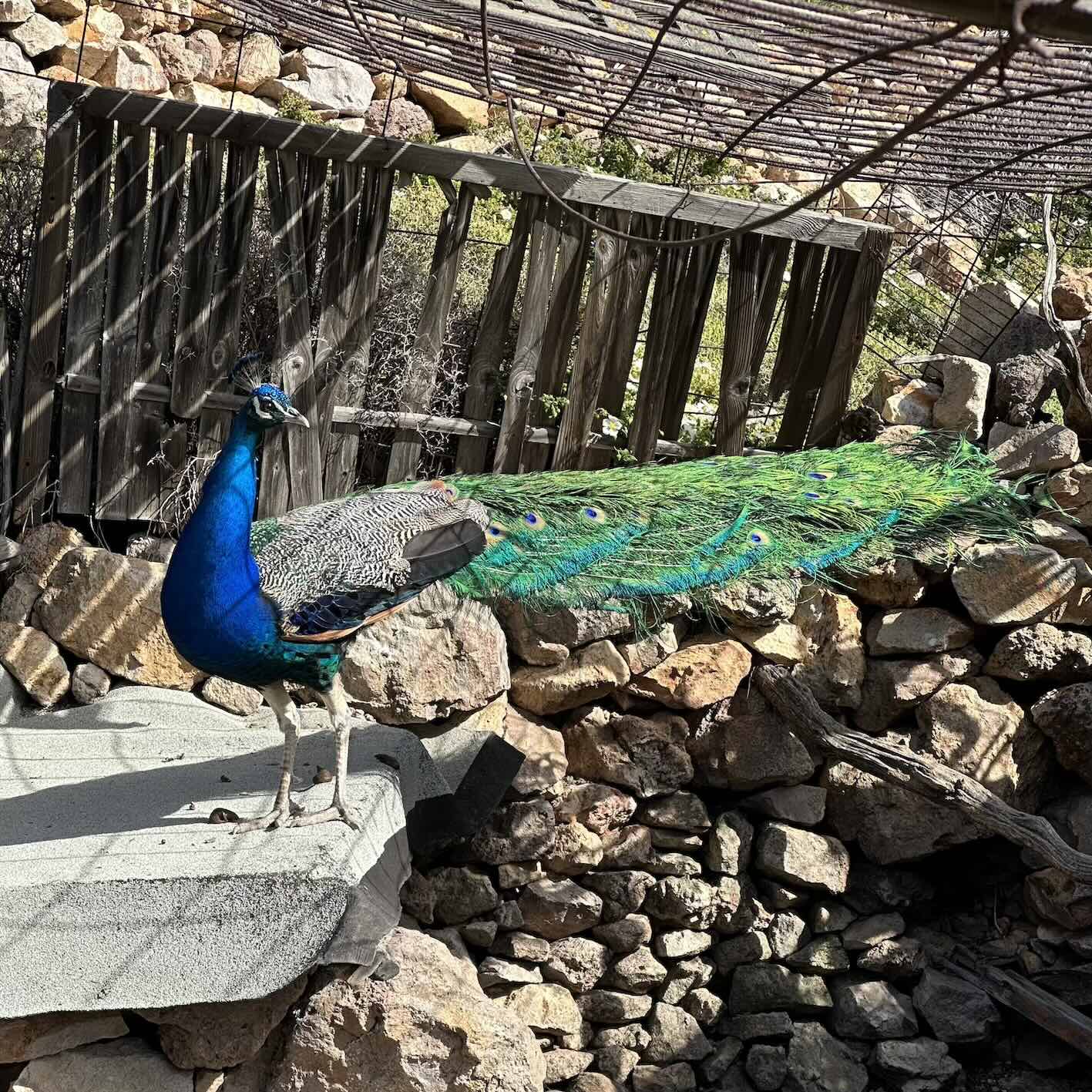
To describe the spaces in detail would be to diminish them, for the synesthetic experience of being there is so multidimensional that words inevitably fall short. If I were to offer just a glimpse to those unfamiliar, I would say it is a network of hybrid, organic spaces that harmoniously integrate the natural elements. Surrounded by flowering gardens, terraces, trees, courtyards, rooftops, a chicken coop with fresh eggs, peacocks wandering freely, and countless spaces for relaxation, meditation or reflection, the whole breathes as a living organism – seamlessly interwoven. To move through Wayne’s world is to wander an astonishing maze of architectural wonders.
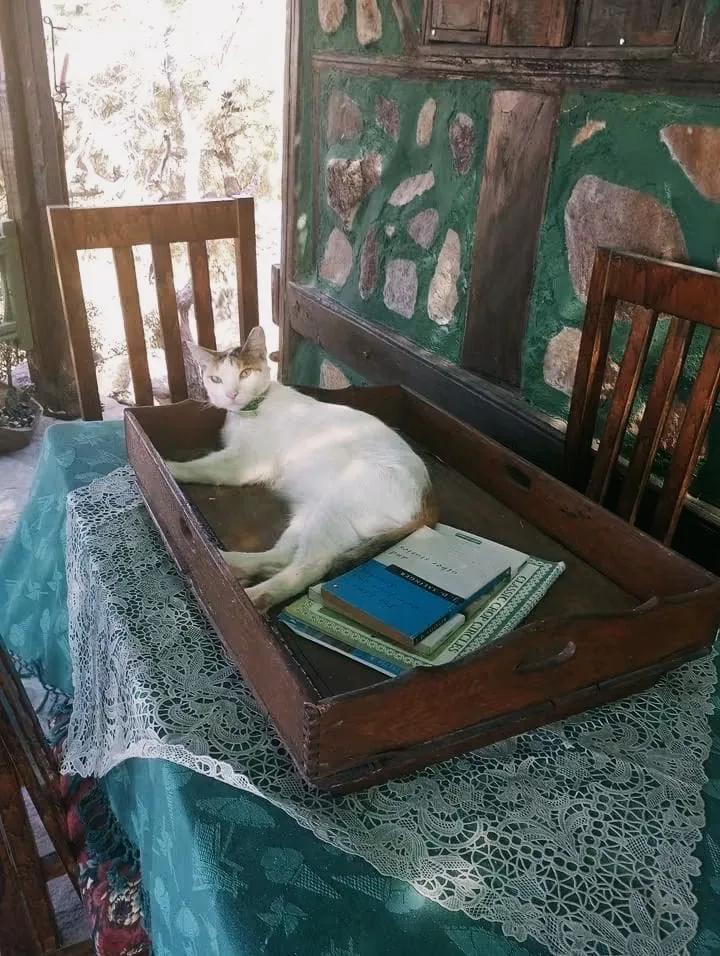
Stone and wood are the dominant materials, yet they are inseparable from Wayne’s soul and ethos. The walls and structures are animated by mementos from his travels and enriched with inventions born of his own ingenuity. The result is a place that stands as an oasis – one that calms the soul while awakening the spirit.
It is a bubble of bliss – fragile yet radiant – in a world where disenchantment and sterile, soulless architecture spread from every direction, threatening to suffocate it like a disease. Yet the bubble endures, a last beacon of enchantment.
His architecture has no blueprint. And yet, unknowingly, Wayne has embodied the very principles of bioclimatic design taught in universities today: minimal footprint, deep respect for nature, and an imaginative synthesis of function and beauty.
I can only hope that this architectural organism will continue to live alongside Wayne for many years to come, for it is an extension of his very being. And I hope that, far into the future – long after him – it will somehow endure, to enchant and inspire generations yet to come, offering a shining example of what I believe to be the healthiest and most beautiful architectural practice on the planet.